

As an international wholesale buyer sourcing furniture from Indonesia, understanding the nuances of furniture packing and loading is essential. With Indonesia’s diverse offerings, from solid teak to exquisite rattan, ensuring that your shipment is packed efficiently and securely is crucial to maintaining the quality and integrity of your products. This guide provides comprehensive insights into best practices for packing and loading furniture for export, ensuring a smooth transition from our factories to your destination.
Optimizing Container Usage for Furniture Exports
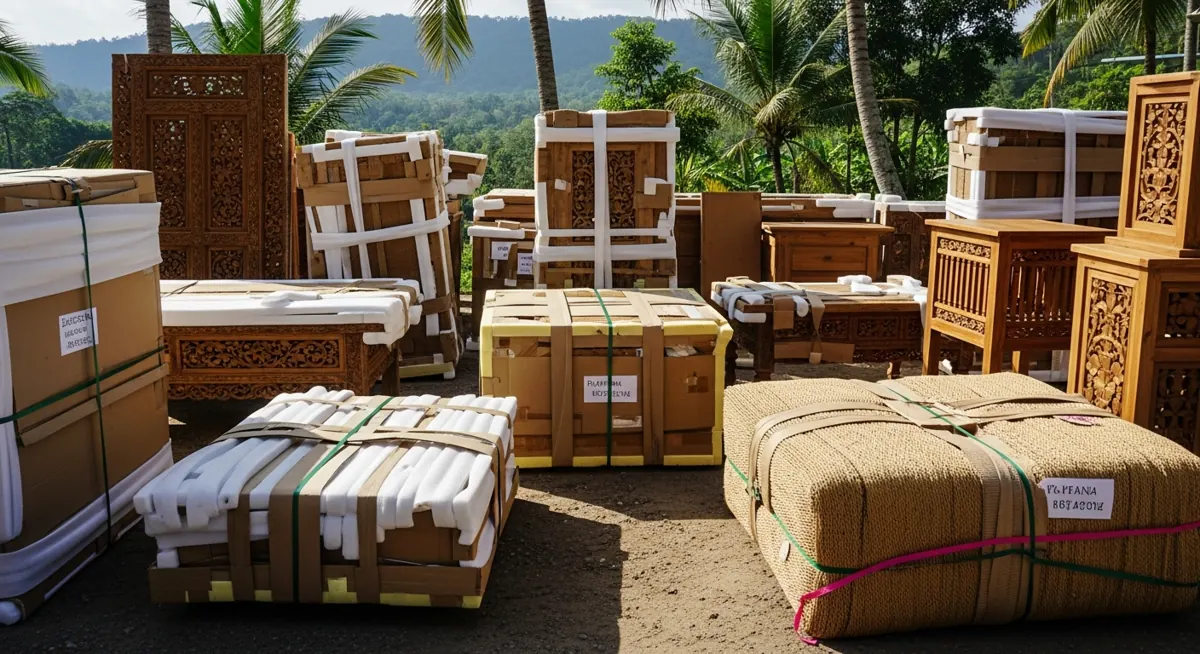
Efficient use of container space is pivotal in the furniture export business. Typically, a 20ft container holds approximately 28 CBM of furniture, while a 40ft container accommodates about 58 CBM, and a 40ft High Cube (40HQ) can hold roughly 68 CBM. The type of furniture being shipped greatly affects how space is utilized. Bulky upholstered or woven pieces tend to “cube out,” filling the volume before reaching weight limits. Conversely, dense knock-down items may reach the container’s weight limit first. Understanding these dynamics helps in planning shipments effectively, reducing costs and ensuring that furniture arrives in pristine condition. For more on how to maximize your shipment, consider exploring our mixed container loads export guide.
Ensuring Legal Compliance with SVLK Certification
Compliance with Indonesia’s SVLK (Sistem Verifikasi Legalitas Kayu) is mandatory for all wood-product exporters. This Timber Legality Assurance System provides a V-Legal Document, certifying that the timber used is legally harvested and traceable. The SVLK is crucial for buyers fulfilling their due diligence under the EU Deforestation Regulation (EUDR) and the US Lacey Act. While SVLK ensures legality, it is not synonymous with FSC, which is a voluntary sustainability certification. Buyers are encouraged to verify the SVLK status through the official SVLK verification portal to ensure compliance and build trust with end consumers.
Material Grades and Finishing Options
When selecting materials for Indonesian furniture, understanding the different grades and finishing options is essential. Teak, for instance, comes in grades A, B, and C, with grade A being the most durable and aesthetically appealing due to its mature heartwood. Mahogany and suar wood also offer various grades that affect durability and appearance. Additionally, finishing options like natural, stained, or painted finishes further enhance the furniture’s aesthetic and protect it from environmental factors. Buyers should consider these factors when making purchase decisions, as they directly impact both the appearance and longevity of the furniture.
Meeting Minimum Order Quantities (MOQ) and Mixed Loads
Understanding MOQ requirements is vital for planning and executing orders efficiently. For solid-wood furniture, per-item MOQs range from 5-20 pieces, while woven/rattan items typically require 10-30 pieces per model or color. The minimum order generally fills a 20ft container, approximately 25-28 CBM. Indonesian exporters commonly accommodate mixed-model and mixed-material containers, provided each item meets its MOQ and the total load meets the minimum CBM. This flexibility allows buyers to diversify their offerings without exceeding budgetary constraints. For insights on how to maximize your mixed-load shipments, visit our dedicated page.
Quality Control and Assurance Processes
Ensuring the quality of furniture is paramount to maintaining customer satisfaction and reducing return rates. Indonesian manufacturers employ rigorous quality control processes at various stages of production. This includes material inspection, mid-production checks, and final inspections before packing. Techniques such as moisture content testing and structural integrity assessments are standard. Buyers are encouraged to work closely with their suppliers to establish clear quality standards and may consider hiring third-party inspection services to ensure compliance with agreed specifications. For more information on material quality control, explore our quality control guide.
Understanding Lead Times and Incoterms
Lead times in furniture production typically span 30-60 days, depending on the order size and finishing requirements. Sea-freight transit times vary, taking approximately 3-5 weeks to destinations like the US, EU, and Australia, with shorter durations to the Middle East and Asia. These timelines are approximate and subject to change based on route and seasonal factors. Most Indonesian exporters utilize FOB terms, where the seller handles export clearance and loading at the Indonesian port, while the buyer books sea freight and insurance. CFR/CNF and CIF terms are also available. For an in-depth understanding of these terms, refer to our lead times and Incoterms page.
Packing and Shipping Considerations
Proper packing is crucial to prevent damage during transit. Indonesian furniture exporters use various packing materials, such as foam, corrugated cardboard, and wooden crates, to ensure protection. Items are often wrapped individually and secured to prevent movement within the container. Buyers should discuss specific packing requirements with their suppliers, especially for delicate or high-value items. Understanding the balance between adequate protection and efficient use of space is vital to optimizing shipping costs and ensuring that products reach their destination in perfect condition.
Key Export Hubs and Ports in Indonesia
Indonesia’s furniture export industry is concentrated around several key hubs and ports. Jepara, Central Java, is famous for its teak and carved/classic furniture, while Bali is known for design-led rattan, outdoor, and contemporary pieces. The main export seaports include Tanjung Perak (Surabaya, East Java), Tanjung Emas (Semarang, Central Java), and Benoa (Bali). These ports are strategically located to facilitate efficient export logistics, ensuring timely delivery of goods to international markets. Buyers are encouraged to confirm the specifics of their shipping routes and schedules with their freight forwarders to optimize logistics.
Payment Terms and Pricing Structures
Payment terms typically involve a deposit of approximately 30-50% by T/T (bank transfer) to initiate production, with the balance due against a copy of the Bill of Lading. These terms are negotiable, especially for repeat buyers. Pricing is determined per order, factoring in material, grade, specification, finish, volume, and Incoterm. As prices are not fixed, prospective buyers are encouraged to request a quote for accurate pricing. For assistance with pricing and orders, please visit our contact page and request a quote.
For further assistance or to initiate your order, please contact us or request a quote to explore the best options tailored to your needs. Our team is ready to support you in making informed sourcing decisions.